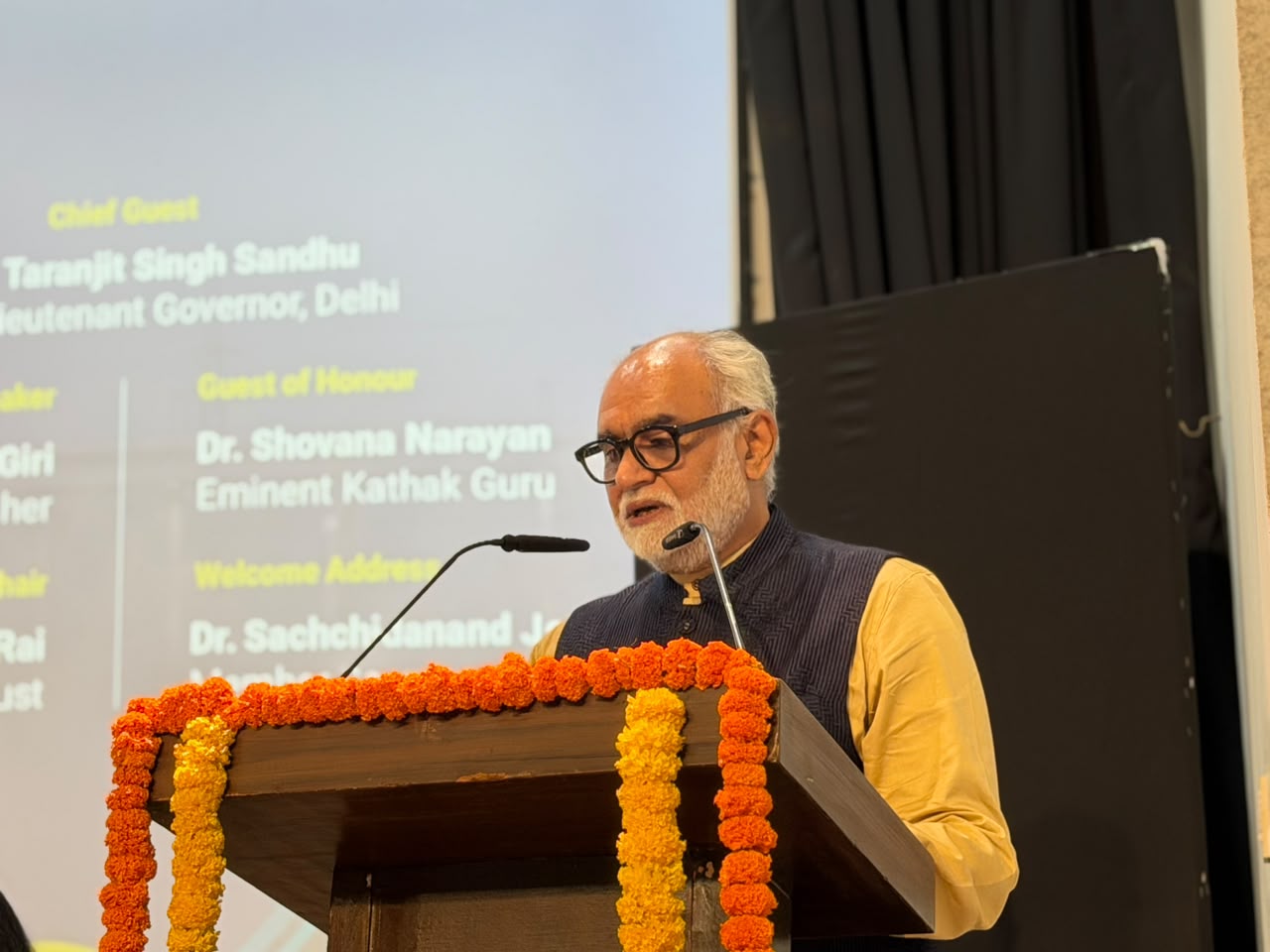
Yamuna Is a Living Symbol of India’s Cultural and Civilizational Memory: Dr. Sachchidanand Josh
7th River Festival focuses on Yamuna’s cultural heritage, history and environmental challenges
New Delhi: The Yamuna is not merely a geographical or ecological entity but a living witness to India’s cultural, historical and civilizational journey, said Dr. Sachchidanand Joshi, Member Secretary and Executive and Academic Head of the Indira Gandhi National Centre for the Arts (IGNCA).
Speaking in the context of the 7th River Festival (Nadi Utsav), Dr. Joshi highlighted the deep relationship between rivers and India’s traditions, art, folklore, religious practices and community life. This year’s festival is focused on the Yamuna and aims to draw greater attention to its cultural and historical significance along with its environmental challenges.
Dr. Joshi said the Yamuna has witnessed several important phases of India’s history and has played a significant role in shaping the political and cultural landscape of the country. The river, he said, connects different periods of Indian civilisation and continues to remain part of the collective cultural memory.
Rivers at the Heart of Indian Civilisation
According to Dr. Joshi, human settlements and civilisations have historically flourished along riverbanks. Rivers have been closely associated with folk songs, folklore, religious rituals and traditional practices. Sacred water has remained an important element in several cultural traditions and rituals from birth to death.
He said that without rivers, a significant part of India’s traditional cultural practices would lose their foundation, as rivers have remained deeply connected with community life for centuries.
Rivers Have Shaped Art and Trade
Rivers have also played an important role in influencing Indian art and architecture. References to rivers can be found in paintings, sculptures and stone carvings dating back to ancient and medieval periods.
Dr. Joshi cited the example of stone carvings depicting the Ganga at Mahabalipuram, pointing out that the cultural influence of rivers has often extended far beyond their geographical boundaries.
He also noted that rivers played an important role in the early development of trade and economic exchange, with people and goods being transported across rivers as part of local commerce.
Every River Has Its Own Cultural Identity
Dr. Joshi emphasised that a river should be understood as a living cultural landscape. Every river has its own distinctive ecosystem, flora and fauna, which in turn influence the lifestyle and cultural practices of communities living along its banks.
He said that the idea of “saving a river” ultimately reflects the need to protect human civilisation and survival. Rivers will continue as part of natural systems, but their health is essential for human society and the communities dependent on them.
Yamuna Takes Centre Stage at 7th River Festival
The 7th River Festival has chosen the Yamuna as its central theme to bring greater focus to the river’s cultural and historical dimensions. Dr. Joshi noted that compared with the Ganga, the Yamuna has received relatively less attention in terms of documented research, written material and public discourse.
The festival seeks to expand the conversation around the Yamuna beyond pollution and environmental concerns and explore its role in India’s history, traditions, art and cultural memory.
Dr. Joshi also highlighted the environmental challenges facing the river in Delhi. The approximately 22-km stretch of the Yamuna passing through the national capital accounts for nearly 85 per cent of the river’s total pollution load, making the Delhi stretch a critical area of concern.
Through the River Festival, the organisers aim to encourage a broader understanding of the Yamuna as not only an environmental resource but also an important part of India’s cultural and civilizational heritage.