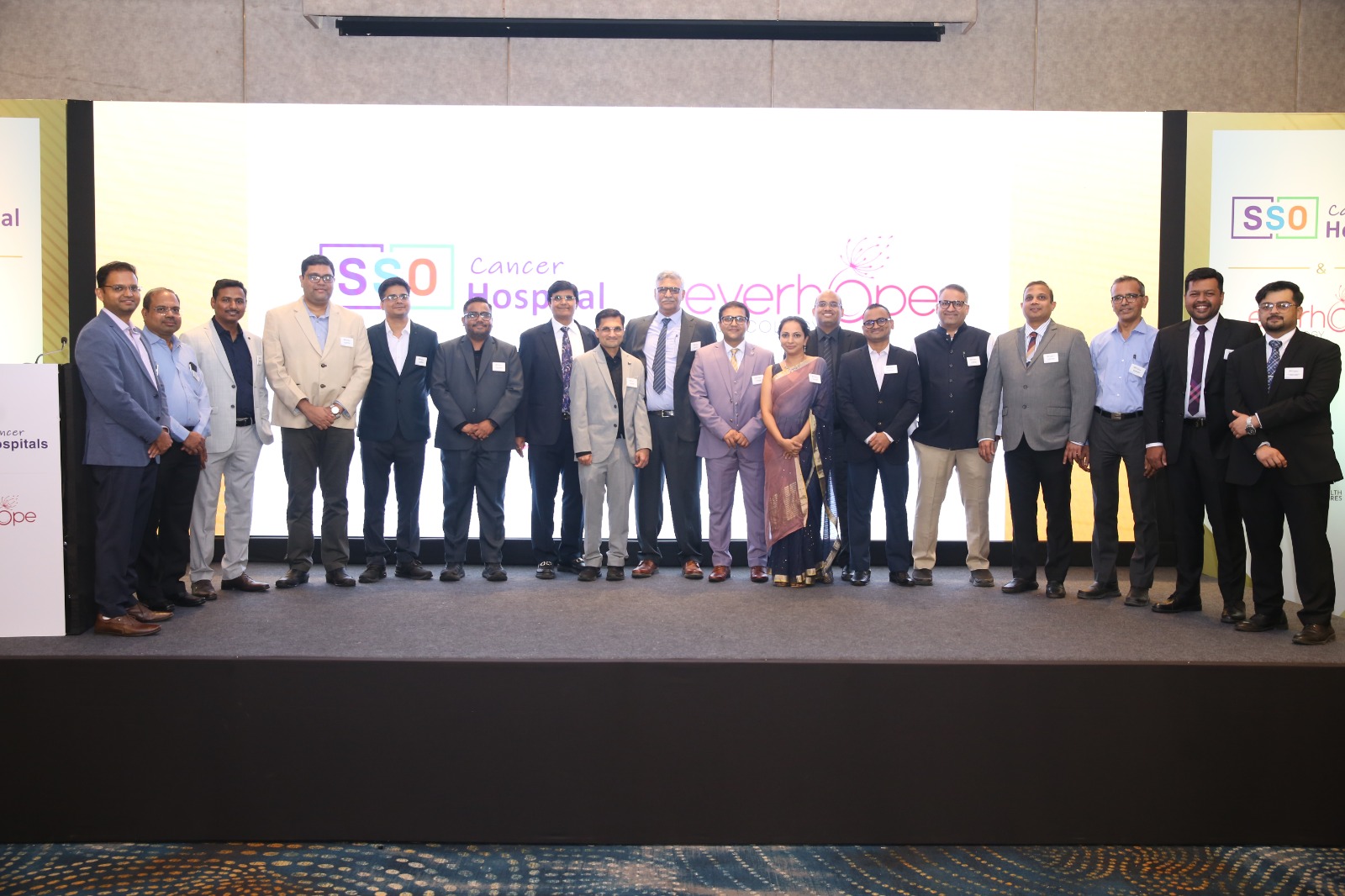
Mumbai: Cancer isn’t simply one type of cancer. Cancer care must be personalized according to the difficulties of each organ system anatomically, biologically, and functionally. World Cancer Day should reflect different types of treatment modalities for all cancers; the most effective method today involves Multidisciplinary Teamwork combined with Organ-specific expertise – this type of approach will give patients patient-centered care.
As part of the SSO Cancer Hospital’s approach to providing care, pathways for treatment are designed to provide organ-specific care by using Structured Multidisciplinary Tumor Board systems. All specialists who care for patients with breast cancer, GI cancers, GYN cancers, thoracic cancers, hepatobiliary cancers, and peritoneal cancers are members of a team that includes Medical Oncologists, Radiation Oncologists, Radiologists, Pathologists, Anesthetists, and Critical Care Practitioners. The end result is better clinical success with preservation of the patient’s quality of life. This ensures that treatment plans are created with the utmost precision based off anatomy, biology and each individual’s personal situation.
The scope of surgical oncology is significant. For example, many early-stage malignancies can be treated using laparoscopy or robotic surgery thus, these patients typically go home in a matter of days and resume their regular lives very quickly. Conversely, many patients with locally advanced malignancies or distant metastatic disease will require extremely complex, very invasive surgical procedures to not only extend their survival but to also improve their ability to perform their usual activities, reduce their discomfort/pain, and in some cases, even be cured of their cancer. To manage these very diverse patients in a safe and effective manner, requires a significant amount of organ specific surgical experience that cannot be achieved through a single generalist.
In the words of Dr.Sanket Mehta, who is the Founder and a Surgical Oncologist at SSO Cancer Hospital, “Organ-specific cancer surgery allows us to match up the most appropriate therapeutic technologies, as well as the most appropriate surgical approach and additional multidisciplinary services to each specific cancer site”.
“When advanced technology platforms, precision-based treatment plans and technology-enhanced work processes are brought together for organ-specific clinical teams, the results are better outcomes both in terms of overall survival rate, but also in terms of recovery time, patient safety, and quality of life over long-term.” Within this model, technology plays a critical role as an enabler. As such, robotic systems and other technologies (high-definition imaging, AI-based surgical planning, and integrated clinical workflow) allow for more precise and coordinated patient care. However, technology can only provide value when developed by experts who have a detailed understanding of the various intricacies of organ systems.
Dr. Kamran Khan, Senior Oncosurgeon at the SSO Cancer Hospital, elaborates When a person is diagnosed with cancer there is only one path between science and economics to achieve the best survival, cure and quality of life. Achieving this through the best scientific protocols with minimum cost and change in life is what we strive to achieve at SSO and are proud to do. In a complex healthcare environment every patient needs to be navigated humanely, sometimes holding their hands through difficult times.”
The benefit of using this integrated care model is that there is less variability in how patients are treated; there are shorter wait times for treatment, and there is a single, coordinated delivery of care across multiple specialties to patients. The primary benefit to patients is that all decisions related to their care have been jointly assessed and made by experts who will be held accountable for not only treating patients but for providing positive outcomes.
On World Cancer Day, SSO Cancer Hospital stands by its commitment to organ-specific, multidisciplinary, and technology-enabled cancer care—because when experts collaborate across disciplines, patients receive care that is precise, compassionate, and truly transformational.