India: India’s innovation capacity is expanding rapidly, supported by one of the world’s largest youth populations and over 1.5 million engineering graduates entering the workforce each year. Combined with rapidly expanding digital infrastructure and more than 1 billion internet users, the country has the structural foundation to thrive in emerging sectors such as artificial intelligence, climate technologies, and digital services.
The presence of talent and ideas does not automatically translate into impact. Across universities, students are developing solutions to challenges in agriculture, healthcare, accessibility, and sustainability. However, many of these ideas do not progress beyond early prototypes. The challenge lies less in creativity and more in the absence of structured pathways that enable early-stage solutions to evolve into systems capable of functioning reliably in real-world conditions. Early-stage innovation, therefore, depends on structured support and real-world validation, without which even well-conceivedsolutions struggle to move beyond initial development.
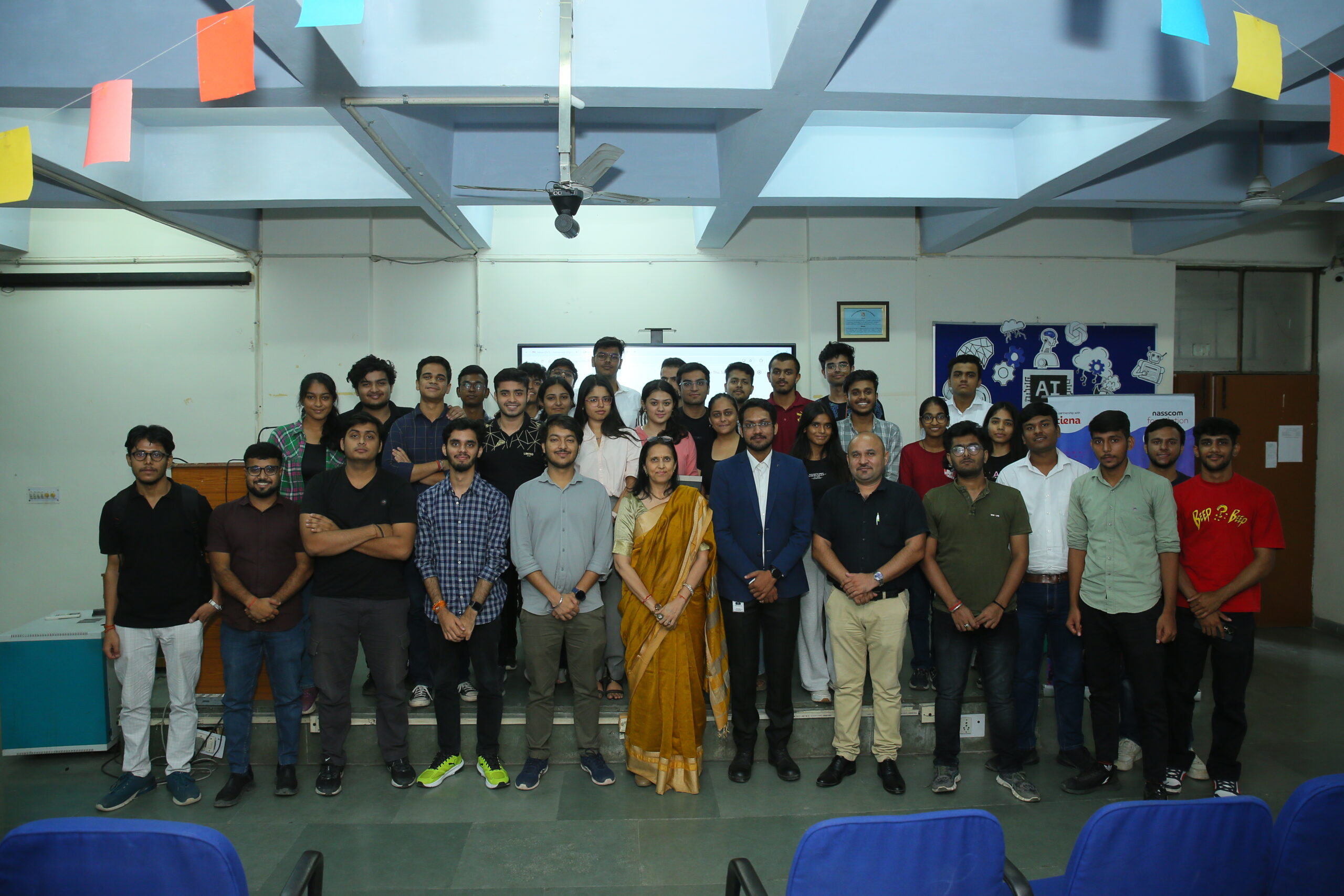
Models that bring together industry, academia, and the social sector are beginning to address this gap. One such example is TechForChange, an initiative by Nasscom Foundation supported by Ciena’s CSR program, which focuses on enabling and empowering the young innovators from colleges to transform their ideas to real-world solutions.
TechForChange – Enabling Early-Stage Innovation to Move Forward
At the earliest stages, ideas are inherently fragile. The distance between concept and application is often unclear, and without the right inputs, many remain exploratory rather than actionable.
“TechForChange supports the formative phase by enabling ideas to be examined, tested, and refined into marketviable products. The emphasis is on providing clear direction so that critical social issues can be addressed through practical solutions.
Mentorship and access to emerging technologies helps the beneficiary teams to rethink the underlying assumptions and align the design related decisions with realworld contexts. This leads to solutions developed with a clearer understanding of implementation needs, shifting learning from demonstrating capability to building meaningful relevance.” says Vineet Vohra, Vice President, Software Engineering Applications, Ciena.
While structured support strengthens how ideas evolve, it is equally shaped by the context in which these ideas originate.
Dual Realities: World-Class Training Meets Everyday Constraints
India’s premier institutions attract some of the country’s brightest talent, a significant proportion of whom come from modest and non-urban backgrounds. The higher education system itself is vast, with over 43 million students enrolled, and engineering and technology programmes forming a substantial share of undergraduate study.
For many of these students, exposure to advanced engineering and digital systems exists alongside a continued connection to communities where gaps in agriculture, transport, and public services remain visible. This proximity shapes how they approach innovation.
Digital Natives with a Global Lens
At the same time, students operate within a globally connected digital ecosystem. They engage with international case studies, emerging business models, and how technology is being deployed across sectors and geographies. Many are increasingly familiar with the language and applications of artificial intelligence, data analytics, climate tech, and platform-based business models.
For India, this convergence of lived experience and global awareness is a strategic advantage. It enables students to act as translators of innovation, taking complex technologies and reshaping them for Indian use cases.
Innovation carries its greatest strategic weight at its formative stage. The initial articulation of an idea shaped by lived context, curiosity, and experience determines whether it can evolve into a solution of lasting relevance. When this stage is overlooked, potential is not immediately lost, but gradually diluted before it has the opportunity to mature.
As Jyoti Sharma, CEO of Nasscom Foundation, observes, “An innovation ecosystem earns its strength not at the moment of ideation, but in what happens next. The distance between a promising idea and lasting impact is rarely a question of vision. It is a question of infrastructure. The gap between a good idea and real impact is where the real opportunity lies. When early-stage solutions are met with the right conditions, capital, mentorship, rigorous validation, and meaningful exposure, they stop being experiments and start becoming agents of change. Scale follows from the deliberate architecture of support built around it.“
TechForChange has engaged students from leading institutions across Delhi, generating over 360 ideasand supporting more than 200 teams through structured innovation tracks. This has led to the development of 40+ prototypes and early-stage ventures, building a growing pipeline of young innovators focused on solving real societal challenges.
Building Local Impact That Scales Nationally
TechForChange demonstrates how ecosystem-led approaches can be built in practice, by connecting student innovators with the mentorship, tools, and contexts needed to translate early ideas into deployable outcomes with tangible social and economic value.
“Technology creates lasting impact when it is designed to work within real-world conditions. Supporting early-stage innovation ensures that ideas are not only technically strong, but also practical and accessible,” says Vineet Vohra.
India’s innovation advantage lies not only in the scale of its talent, but in the systems that enable it. The ability to carry ideas from early articulation to real-world application will determine whether innovation remains conceptual or becomes part of everyday life.